Why Your Dental Practice’s Social Media Isn’t Working In 2026
May 18, 2026
|
Post by Rahil Kumar
|
Social Media

Most dental practices believe they have a dental marketing problem.
Not enough traffic. Not enough leads. Not enough new patients coming through the door.
So the response is predictable. Run more ads. Post more content. Try a new dental marketing agency. And when that doesn’t move the needle, try another one.
But working exclusively in dental marketing, the pattern we see repeatedly is this: the problem is rarely the activity. It’s the understanding of how marketing actually works today. As we explored in a recent post on why more traffic isn’t getting you more dental patients, practices are often working harder than ever on strategies built on assumptions about how patients behave that simply aren’t true anymore.
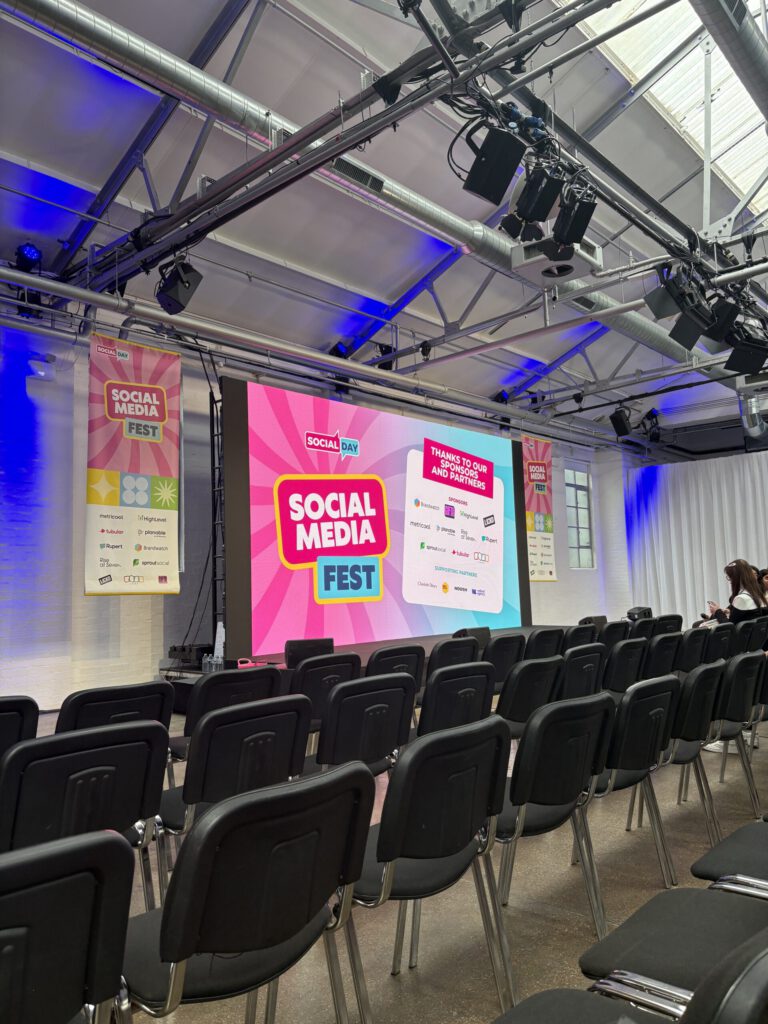
I heard Grace Andrews speak recently – one of the women who was pivotal in scaling The Diary of a CEO from 8,000 YouTube subscribers to over 14 million, and launched podcasts from zero to hundreds of thousands of followers on budgets that would surprise most people. Almost everything she said about what drives real, sustainable growth maps directly onto what we see in dental marketing every single day.
Here’s what practices need to understand.
The traditional funnel is dead. Patients don’t move in straight lines.
For years, dental marketing has been built on a simple model: awareness leads to consideration, consideration leads to conversion. You run an ad, the patient sees it, the patient books. Clean. Linear. Predictable.
The problem is that’s not how patients actually behave anymore.
A patient might see one of your Instagram posts, forget about it, Google you three weeks later, read your reviews, watch a video, mention it to a friend, and then finally enquire. Or they skip half of that entirely and book after one well-timed Facebook ad. Or they’ve been passively following your content for four months before they do anything at all.
Grace made this point clearly: there is no fixed journey anymore. There is just your world of touchpoints. Every place a potential patient encounters your practice – social media, Google, a friend’s recommendation, a piece of content – is a touchpoint. And the job of dental marketing is not to push people through a funnel. It’s to show up well across enough of those touchpoints that when someone is ready to book, yours is the practice they already feel they know.
That’s a fundamentally different way of thinking about dental marketing strategy. And most practices haven’t made the shift.
Inconsistency is the real problem. Not the platform, not the budget.
When we look at why dental practices struggle with social media marketing, the answer is almost always the same. It’s not the platform. It’s not the content. It’s that they stop.
A burst of posts in January. A few treatment promotions. Maybe a before-and-after or two. Then six weeks of silence. Then a Bank Holiday offer. Then nothing.
Grace’s analogy is the most straightforward way to explain why this doesn’t work: if you go to the gym once, you won’t see results. If you go once every three months, you won’t see results. If you go consistently, you build muscle.
She was specific about the numbers too – for most businesses starting from scratch, meaningful traction tends to come around the 100-post mark. Not because of some algorithm quirk, but because that’s genuinely how long it takes to learn what your audience responds to. What makes them stop scrolling. What makes them comment. What makes them want to book.
100 posts sounds like a lot. It’s roughly eight months of three posts a week. Most practices quit in week four, look at the engagement numbers, and conclude that social media doesn’t work.
It’s not that social media doesn’t work. It’s that effective dental marketing requires more patience than most people are willing to give it, and more consistency than most practices can maintain without a proper system behind them.
Patients are allergic to being sold to.
Look at the average dental practice Instagram. Special offer on Invisalign. Before-and-after with a caption about smile transformations. Finance options in a graphic. Another offer. Another promotion.
Now ask honestly: if you weren’t the practice owner, would you follow that account?
This is the core mistake we see made repeatedly across dental marketing. Practices have confused having a social media presence with running a promotional channel. They’re not the same thing. And patients, particularly the high-value patients that cosmetic and Invisalign-focused practices are trying to reach, are switched on enough to recognise the difference immediately.
Grace framed it simply: people are allergic to being sold to. We encounter thousands of adverts every day. We’ve all become experts at identifying when something is trying to sell us something. And our response is to scroll past it without a second thought.
What actually stops people scrolling is content that makes them feel something. Content that answers a question they’ve been carrying around. Content that makes them feel understood – that communicates, without saying it directly, that this practice gets people like them.
The framework that works is straightforward: the job of dental social media marketing is not to sell. It’s to build trust. The bookings are a byproduct of that trust. A useful rule of thumb – if you’re posting regularly, only one in every seven posts should be promotional. The other six are doing the relationship-building work that makes that one post convert.
For most dental practices, that ratio is completely inverted. And they can’t understand why nothing’s working.
The best dental marketing ideas are already happening in your practice.
The most common reason practices give for inconsistent posting is that they don’t know what to say. They sit down to create content and hit a blank screen.
Grace’s answer to this is one of the most practical things I’ve heard on the subject: stop starting from scratch.
She talked about a client who froze the moment a camera appeared but could send a detailed 25-minute voice note about her work without thinking twice. Her advice was to record the voice note, run it through an AI transcription tool, and ask it to turn what you said into five posts. You haven’t invented new content. You’ve captured how you already communicate and put it somewhere your audience can hear it.
In dental practices, this is even more applicable. Think about what happens in your practice every single day. Clinicians or TCOs are explaining why a patient needs a particular treatment. They’re answering questions about cost, pain, and recovery time. They’re reassuring a nervous patient before they sit in the chair. They’re having conversations about why someone has put off their dental care for five years.
Every one of those conversations is content. Every question a patient asks in the chair is a question someone in your area is typing into Instagram or Google right now. The raw material is already there, it’s happening in your practice every single day. The gap is in capturing it and putting it somewhere people can find it.
The best dental marketing ideas don’t come from a content calendar template. They come from paying attention to what your patients are already asking.
Build the audience before you need it.
This is the shift that represents the biggest missed opportunity in dental marketing strategy right now.
The brands that win their launches, whether that’s a new product, a new service, or a new treatment, don’t win on launch day. They win because of the content that came in the months before it. Content aimed directly at the people they want to reach, that answers their questions, addresses their fears, and makes them invested before anything is even available. By the time the thing launches, the audience is already warm. Already bought in.
Think about how most practices launch a new treatment. A graphic goes up on the day it’s live. Maybe a promotional offer. Maybe a boosted post. And then the practice owner is disappointed when uptake is slow in the first month.
What if instead, for the six to eight weeks before introducing a new Invisalign package, a facial aesthetics offering, or a new membership plan, the content was already speaking directly to the patients you want to attract? Answering the questions they already have. Showing them results. Walking them through the process. Making them feel like they understand exactly what they’re considering?
By the time you open the door, the room is already full of people who’ve decided. That’s not luck. That’s a dental marketing strategy. And almost no practice is doing it.
What this actually comes down to.
Grace said something near the end of her talk that cuts to the heart of it: social media rewards consistency. Whatever you can do repeatedly and commit to – that’s your strategy.
The practices winning at dental marketing right now are not necessarily the ones with the best content or the biggest budgets. They’re the ones that show up reliably, lead with value over promotion, and treat marketing as a long game rather than a quick fix.
Dentistry is one of the most trusted professions there is. The expertise is there. The results are there. The gap between most practices and the patients who should be booking with them is not a budget problem, not a platform problem, and not a content problem.
It’s a consistency problem. And it’s one that’s very possible to solve.
If social media is the part of your dental marketing that keeps falling off – the posting that starts strong and fades, the content that never quite gets made – our social media management packages are built specifically to solve that. Or if you’d rather talk it through first, book a call with us and we’ll take a look at where your practice is and what would actually make a difference.